
Understanding MOQ: Why Yarn-Dyed Towels Require Higher Minimums
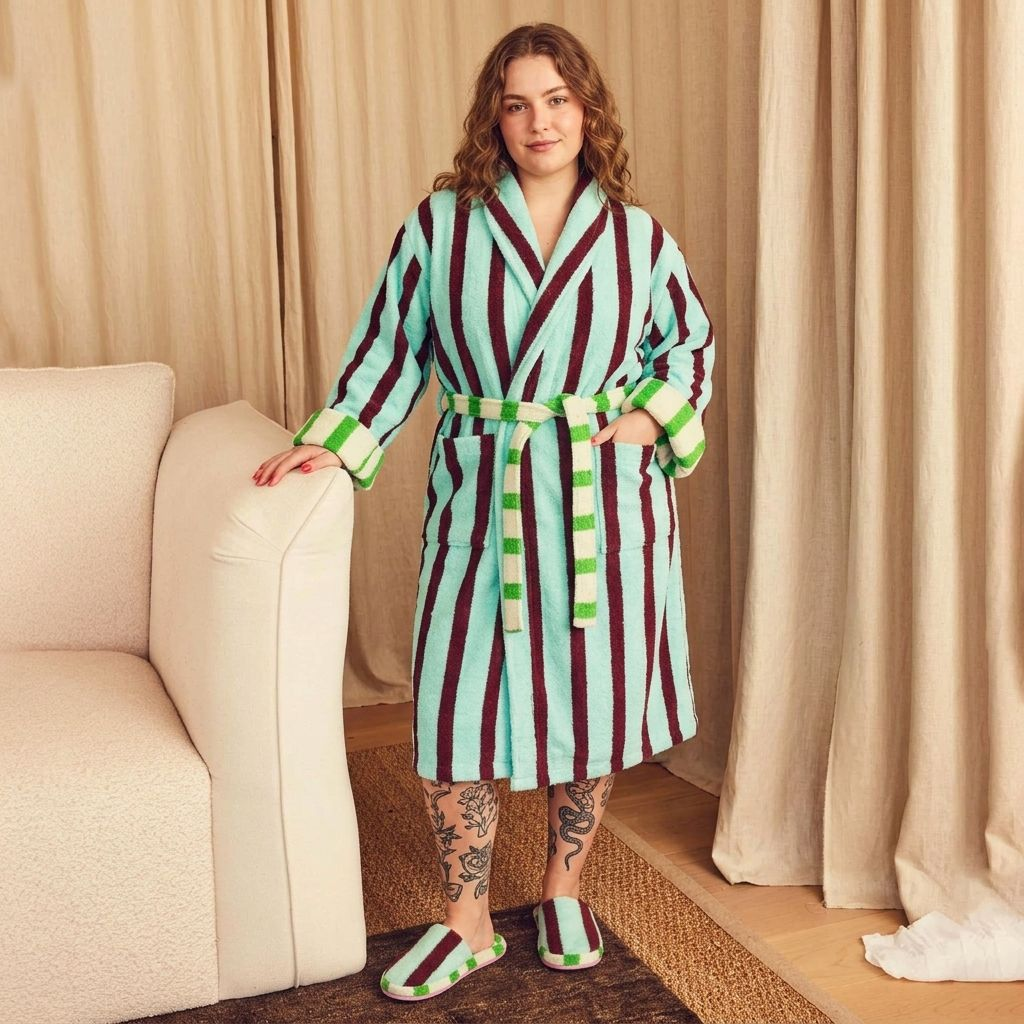
For buyers and brands sourcing two-color yarn-dyed towels, one of the first questions is always about minimum order quantity. The answer depends largely on whether you are choosing from existing stock or requesting a fully custom design. The reason yarn-dyed towels carry higher MOQs than their white-base printed counterparts comes down to the production process itself: two colors of yarn must be dyed separately, warped and arranged in distinct sequences, and the weaving machines must be specifically set up for each design. This is a standard requirement across the industry, whether you are working with a Gym Towel Factory, a Surf Poncho Factory, or one of the many Bathrobe Manufacturers supplying the global market.
In-Stock Standard Two-Color Stripes (No New Yarn Dyeing)
For buyers who need quick delivery and the lowest possible unit price, in-stock standard two-color stripes are the ideal choice. Because no new yarn dyeing is required, the MOQ is significantly lower. Square and face towels typically require a minimum of 500 pieces, while bath and sports towels start at just 100 to 200 pieces. This option offers the advantage of direct delivery from existing inventory, making it the most cost-effective route for smaller orders.
Custom Two-Color Styles (Custom Colors, Stripes, or Patterns)
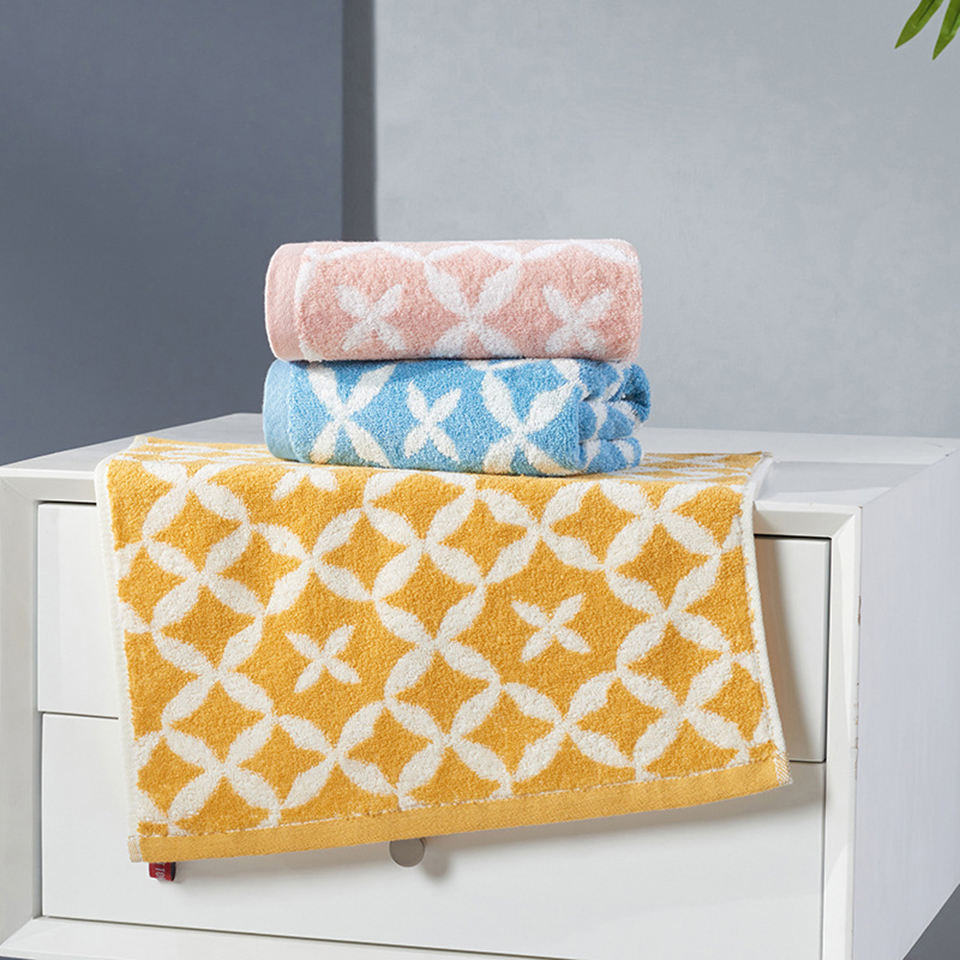
When a buyer requires custom colors or unique stripe arrangements, the MOQ rises accordingly. For standard dobby two-color stripes without jacquard, household face towels require a minimum of 1,000 pieces, while bath and beach towels start at 300 pieces. For two-color jacquard towels featuring text, checks, or intricate patterns, the general MOQ ranges from 500 to 1,000 pieces. These higher minimums reflect the complexity of the process: two batches of yarn must be re-dyed, warping and color arrangement are necessary, and dobby or jacquard machines must be set up, all of which generate significant startup waste.
The Complete Production Process: From Yarn Dyeing to Finished Towel
The defining principle of yarn-dyed textiles is simple: the yarn is dyed first, then woven. This sequence is what gives yarn-dyed towels their rich, lasting color and distinguishes them from printed alternatives. The production process unfolds in four distinct stages.
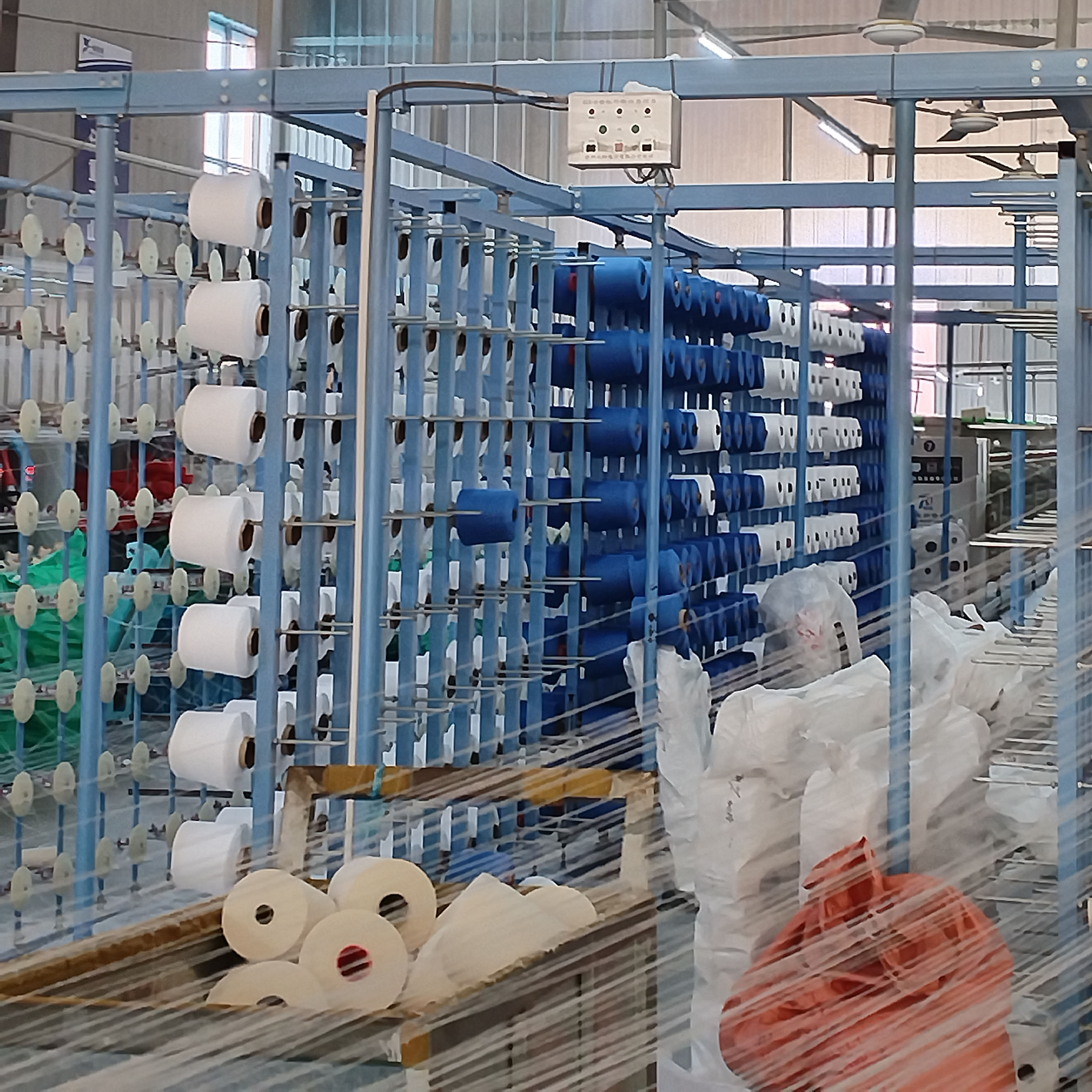
Initial Stage: Yarn Dyeing
The process begins with raw yarn inspection. Pure cotton yarn, typically 32s or 40s, is categorized into ground warp, pile warp, and weft. Broken yarns and slubs are carefully removed to ensure consistent quality. Next, the yarn undergoes hank scouring, a process that removes cotton wax and impurities to ensure uniform dyeing results.
The two colors are then dyed in separate baths using reactive dyes at high temperatures. A fixation process follows to enhance color fastness, achieving Grade 4 or higher. After dyeing, the yarn is washed and boiled to remove loose surface dye, preventing color bleeding in the final product. Finally, the colored yarn is dried and wound into yarn packages, with the two colors stored separately to maintain clear distinction throughout the remaining process.
Intermediate Stage: Pre-Weaving Preparation
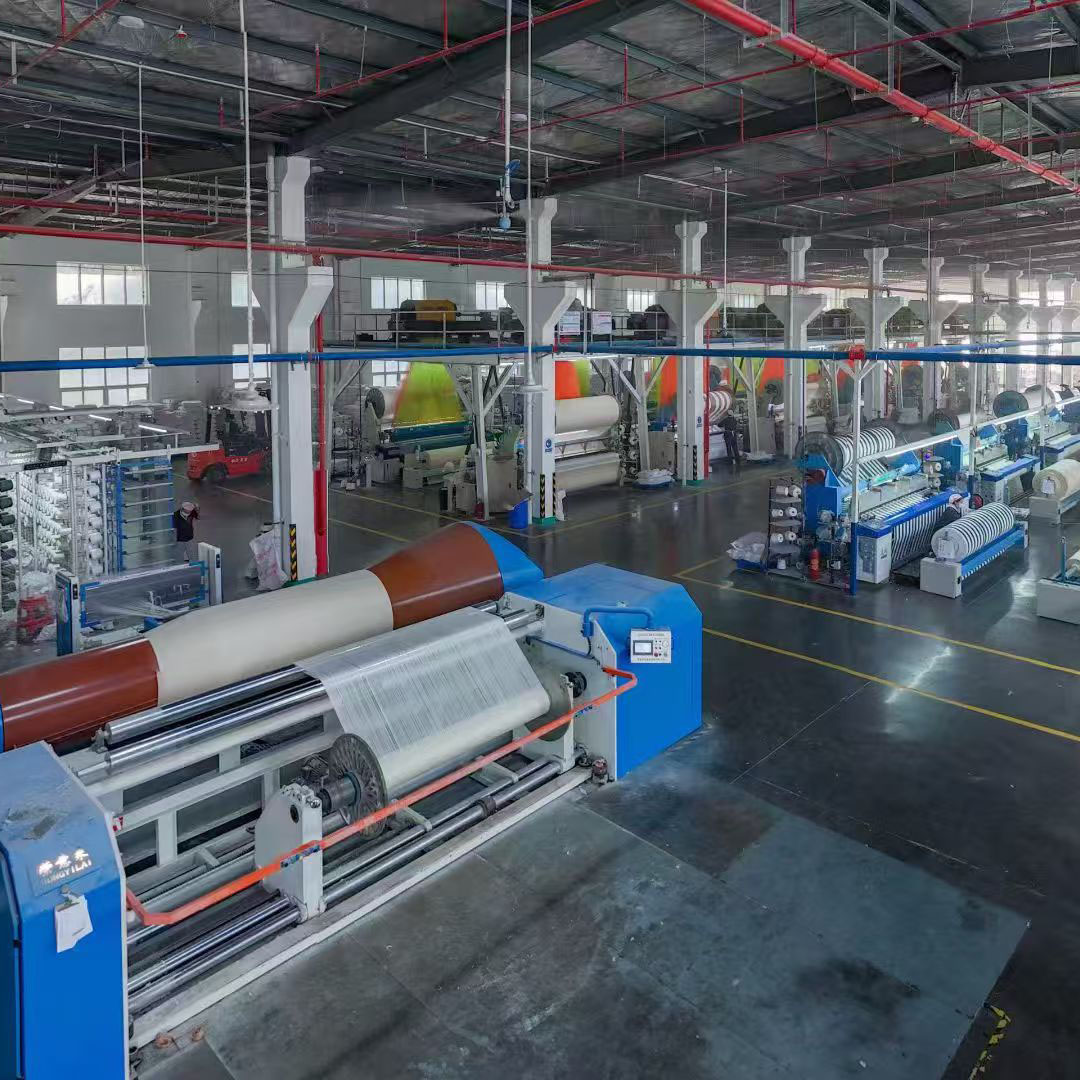
This stage is where the two-color arrangement takes shape. Sectional warping is the key step: the two colors of warp yarn are alternately arranged according to the stripe design, producing a uniform warp beam. This step determines the width and spacing of the two-color stripes. The warped yarn then undergoes sizing, which applies a protective coating to prevent breakage during the high-tension weaving process.
Following sizing, the yarn passes through heald and reed drawing-in, where threads are arranged according to the pattern design. For dobby mechanisms, this step is relatively straightforward; for two-tone checks or jacquard designs, additional multi-color shuttle boxes are required. In parallel, the two colored weft yarns are wound onto pins for use in the rapier towel loom.
Weaving Stage: Terry Weaving
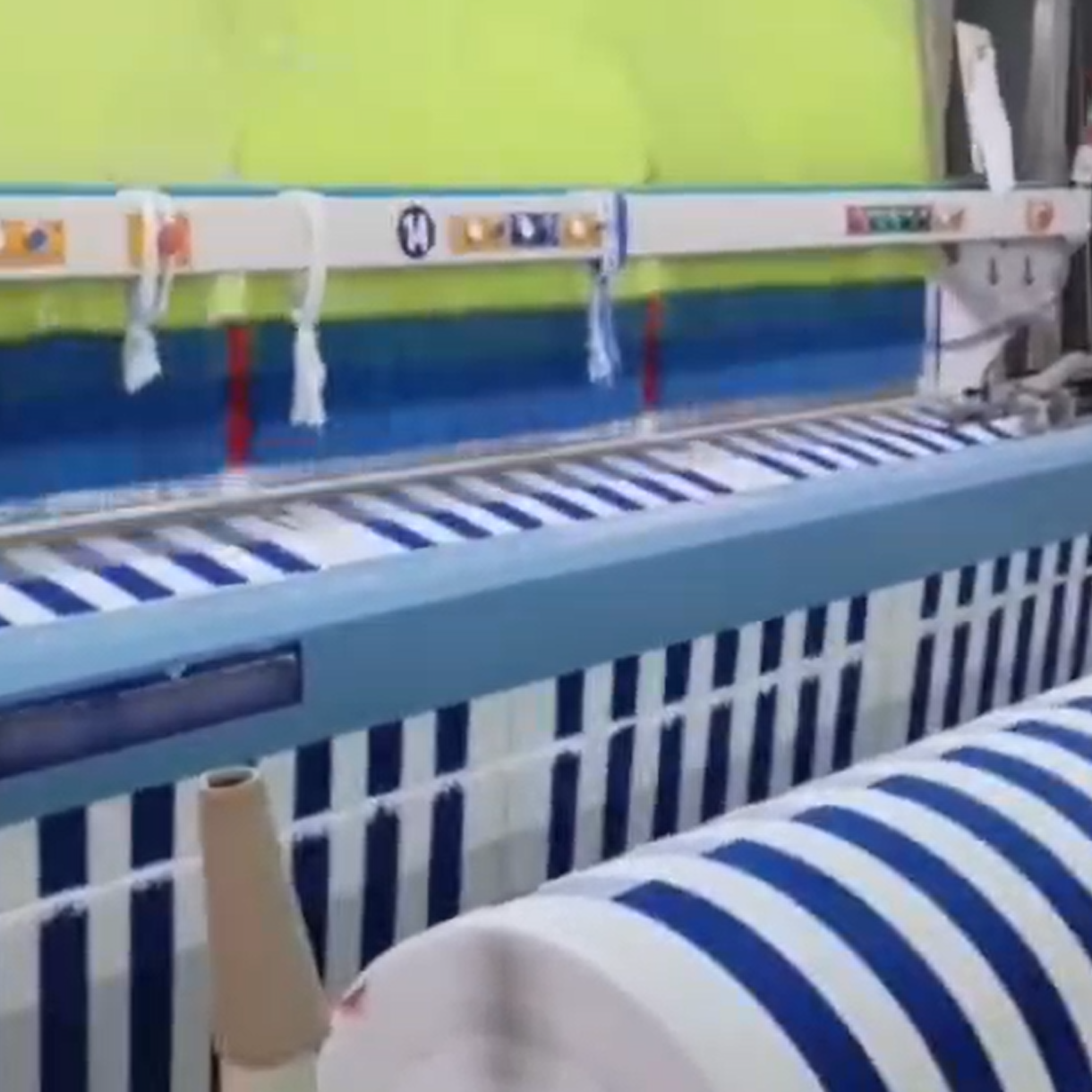
The weaving stage brings the design to life. On a rapier towel loom, two-color stripes are produced using a dobby mechanism that switches warp colors, requiring only a single shuttle box. For two-color checks or double-sided two-color designs, the loom is equipped with a double shuttle box to alternately insert the two colored weft yarns. The result is a continuous towel fabric featuring a two-color pattern with a terry loop structure, the hallmark of quality terry towels.
Post-Processing: From Greige Fabric to Finished Product
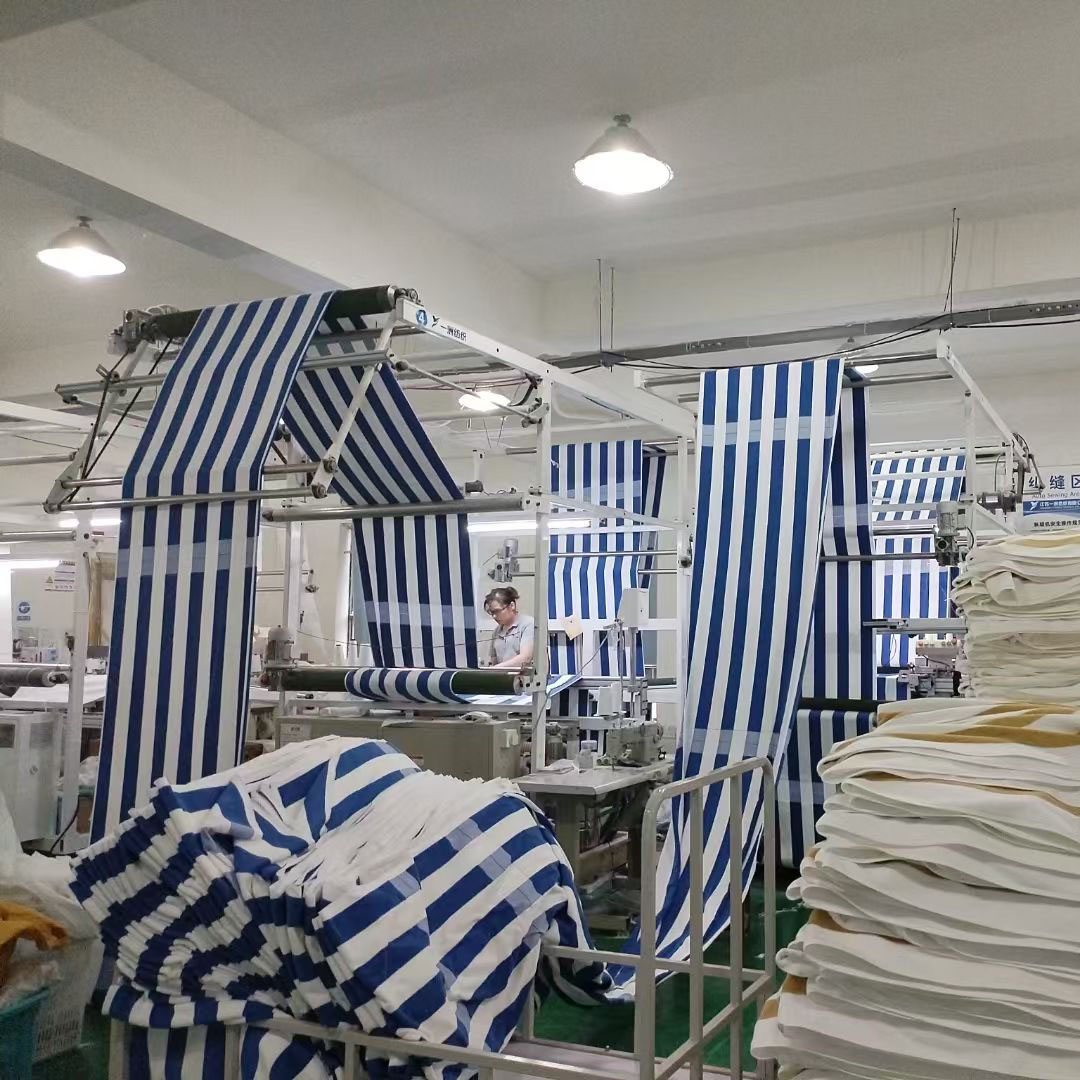
After weaving, the greige fabric undergoes preliminary inspection, where defects such as broken yarns, color streaks, and mis-picks are identified and sorted. The fabric then goes through pre-shrinking via washing, an essential step for yarn-dyed fabrics that removes weaving sizing agents and prevents shrinkage in the finished product.
Next, the fabric is dried and processed through a stenter setting machine, which uses high-temperature steam to flatten the fabric while controlling width and shrinkage to within 5 percent. The fabric is then slit into continuous long strips according to the dimensions of the final face towels or bath towels. Edge stitching follows, with double-thread overlock stitching applied to all four sides to prevent shedding and unraveling.
The finished product then undergoes a final wash and re-inspection, with spot checks for color fastness, fiber shedding, and dimensional accuracy. Finally, the towels are folded, tagged, and packaged in gift boxes or plastic bags before being warehoused for distribution.
Yarn-Dyed vs. Printed: A Key Difference for Buyers
For buyers deciding between yarn-dyed and printed towels, understanding the fundamental difference is essential. Yarn-dyed towels are made by dyeing the yarn before weaving, resulting in stripes or checks with rich depth and color that does not fade upon washing. The trade-off is a higher minimum order quantity and a more complex production process.
Pigment printing, by contrast, applies two-color printing after the greige fabric is woven. This method offers a much lower minimum order quantity, sometimes as low as 50 pieces, making it accessible for small-batch production. However, printed towels are prone to fading and whitening after repeated washing and generally have a poorer hand-feel compared to their yarn-dyed counterparts.
Choosing the Right Option
For buyers prioritizing color durability, premium hand-feel, and a sophisticated striped or check design, yarn-dyed towels are the superior choice, provided the order volume meets the MOQ requirements. For smaller batches, test runs, or budget-conscious projects where color longevity is less critical, printed towels offer a practical alternative. Understanding these trade-offs allows buyers to make informed decisions that align with their market positioning and production capabilities.
(The materials are from the Internet. If there is any infringement, please contact us for deletion)
Post time: Sep-15-2026