
Walk into any home goods store, and you will find towels divided into two increasingly distinct camps. On one side sit the familiar plush, looped surfaces of terry cloth. On the other, the crisp, grid-like texture of waffle weaves, often marketed as lighter, faster-drying, and more “modern.” For buyers and product developers, the choice between them is rarely about aesthetics alone. It comes down to a specific performance question: which fabric actually absorbs more water, and why?
The short answer, supported by both textile science and independent product testing, is that terry cloth wins on raw absorbency per square unit of fabric. The longer answer requires an understanding of how the two fabrics are built—and why their production processes produce fundamentally different water-handling behaviors.
The Structural Logic of Terry: Surface Area as a Sponge
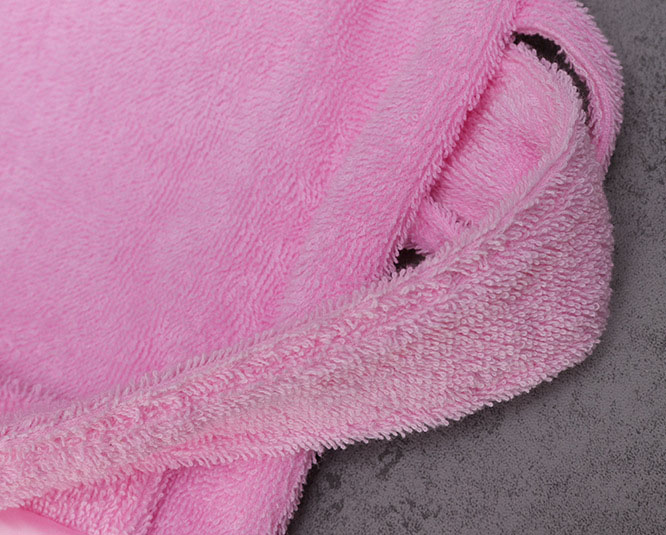
Terry cloth is a pile fabric. During weaving, an extra set of warp yarns—the pile warp—is manipulated to form loops that stand up from the ground cloth on one or both faces. These loops are not decorative. They are the primary absorption mechanism.
When a water droplet contacts terry fabric, the pile loops first draw the liquid into the spaces between the loops, and then into the interstitial spaces between fibers within the yarn itself. The efficiency of this process depends on loop geometry. Textile research consistently identifies “loop shape factor” as a key determinant of terry absorbency: higher, well-formed loops create a larger capillary population and a greater effective surface area for water uptake. Studies on terry fabrics have shown that increasing pile height generally increases water absorption, and that around 65 percent of total water uptake can occur within the first thirty seconds of contact. A heavy cotton terry towel, often in the 500–700 GSM range, holds “several times its weight” in water precisely because its looped pile provides a deep, three-dimensional reservoir.
In practical terms, terry does not merely wipe water from the skin. It lifts and stores it within a structured pile layer, which is why a quality terry towel can leave the body noticeably drier after a single pass than a flat or lightly textured fabric.

What Waffle Weave Does Differently—and Why “Absorbent” Is Not the Same as “Water-Locking”
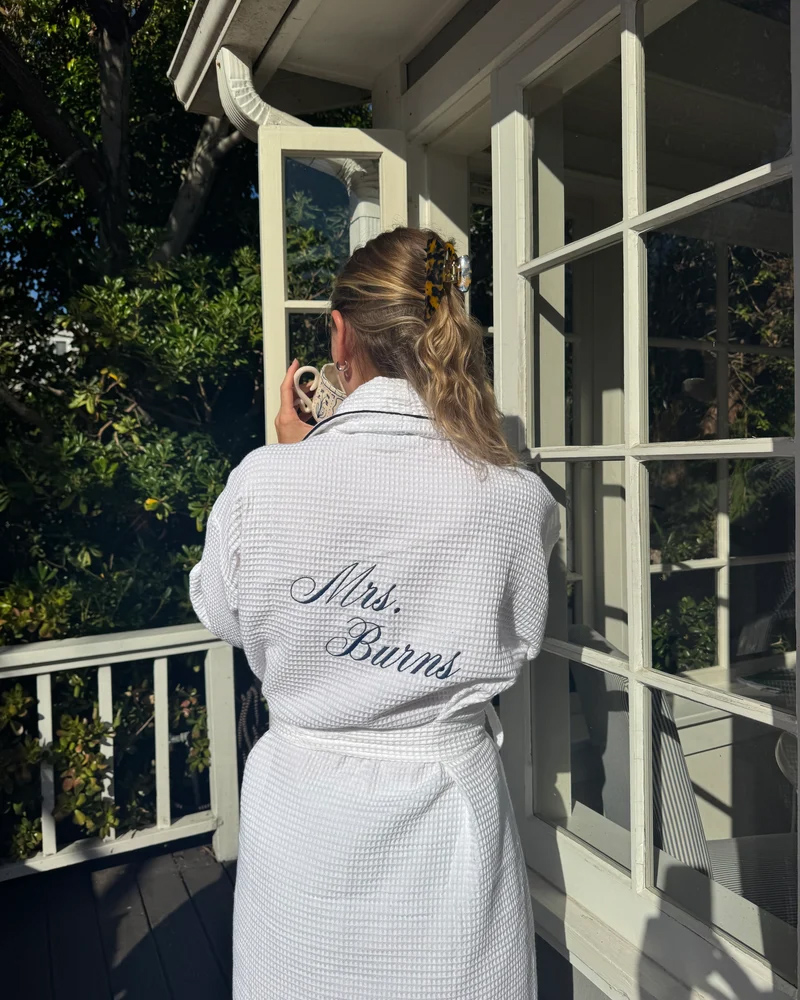
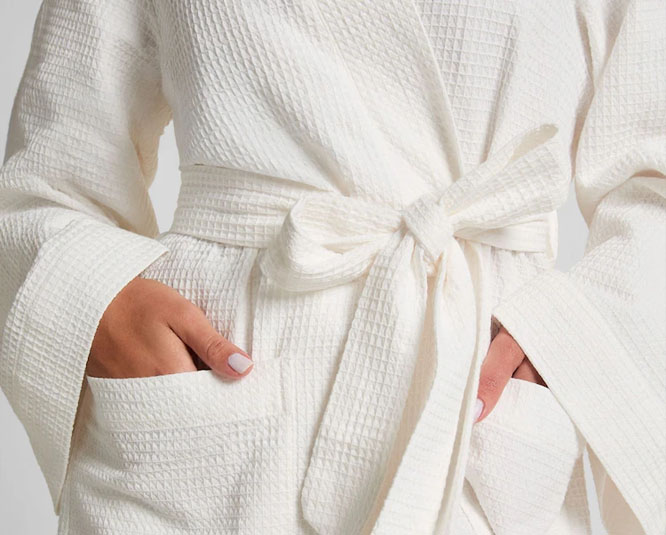
Waffle weave is a structured grid, not a pile fabric. It is woven with warp and weft floats arranged in a repeating pattern to create raised ridges surrounding recessed square cells. This honeycomb architecture has far less surface area than a comparable terry pile. Water interacts with waffle fabric primarily through the capillary action of its yarns and the temporary containment offered by its cell structure, but the fabric lacks the deep, looped pile that allows terry to hold a large volume of water within the cloth.
This is why the marketing language around waffle towels often emphasizes drying speed rather than absorption capacity. The open grid allows air to move through the fabric readily, so a waffle towel hung on a rail can be touch-dry in one to four hours, while a heavy terry towel may require eight to twenty-four hours depending on conditions. Independent testing by Good Housekeeping, which has evaluated dozens of towel styles over years of lab and home use, has consistently found that traditional cotton terry towels deliver the best absorbency results, while waffle styles—even well-made ones—typically do not match terry on this metric.
A common point of confusion arises from comparative tests where a specific waffle towel may absorb a slightly higher total volume than a specific terry towel. Such results are highly dependent on the weight, size, and construction of the individual samples tested, and they do not overturn the structural principle: per square centimeter of comparable fabric, terry’s looped pile provides a greater water-holding capacity. The waffle weave’s advantage lies in moisture release and airflow, not in moisture sequestration.
Where the Production Difference Begins: Yarn Preparation and Pile Formation
The performance gap is rooted in manufacturing. Terry weaving requires a dedicated pile-warp system. The pile yarns must be prepared, tensioned, and controlled independently from the ground warp so that they can be woven into standing loops. The quality of the finished towel depends heavily on pile yarn characteristics: coarser pile yarns in the 8s to 30s Ne range are common in toweling, and the loop height, density, and uniformity all influence absorbency and hand-feel. After weaving, terry fabrics typically undergo washing, drying, and often a light brushing or tumbling step to open the loops and maximize surface area.
Waffle weaving does not require a pile-warp mechanism. Its three-dimensional effect is created entirely through the interlacing pattern of warp and weft floats. The production priority shifts from loop formation and pile retention toward maintaining a consistent grid geometry and dimensional stability after washing. This makes waffle construction simpler in some respects and allows for lighter finished weights—commonly 350–500 GSM, compared with the 500–700 GSM typical of quality terry bath towels. The lighter weight contributes to faster drying, but it also means there is simply less fiber mass available to hold water.
What the Test Standards Actually Measure
The industry’s standard absorbency test, AATCC 79, measures the time required for a defined water droplet to be completely absorbed by the fabric surface. A fast absorption time indicates that the fabric’s surface chemistry and capillary structure are readily wettable. Well-processed cotton terry can absorb a droplet in a matter of seconds or less under controlled conditions, and toweling fabrics in general are expected to show rapid droplet uptake compared with fabrics that have been treated with water-repellent finishes.
However, droplet absorption time is not the same as total water capacity. A fabric can wet quickly yet hold relatively little water, or wet slightly more slowly while ultimately storing a much larger volume. For consumers and product teams, this distinction matters. If the goal is to remove a large amount of water from the body or hair in a single contact, total capacity—terry’s strength—is the relevant metric. If the goal is a towel that remains fresh between uses in a humid bathroom, drying speed—waffle’s strength—may be more important.
Reading the Trade-Off Correctly
The evidence does not support a claim that waffle weave is a “better” or “worse” towel in any absolute sense. It supports a narrower and more useful conclusion: terry cloth is more absorbent per unit area because its looped pile creates a larger, deeper capillary reservoir, while waffle weave prioritizes airflow and rapid drying through an open grid structure.
For product developers, this means the choice should be driven by the intended use case. In practice, this is why a Towel Robe Factory may prioritize terry for bathrobes, while Gym Towel Factories often favor lighter, faster-drying constructions, and a Surf Poncho Factory may blend both approaches depending on the product line. Terry remains the appropriate construction when maximum water pickup and a plush, enveloping hand-feel are priorities—bath towels, beach towels, and applications where the user expects to be substantially drier after one use. Waffle weave is better suited to environments where a towel must dry quickly between uses, where storage space is limited, or where a lighter, more textured hand-feel is preferred. The two fabrics are not competing answers to the same question. They are engineered solutions to different problems—and understanding the production logic behind each is the first step toward specifying the right one.
(The materials are from the Internet. If there is any infringement, please contact us for deletion)
Post time: Nov-04-2026