
As home loungewear becomes a mainstream consumer trend globally, bathrobes have evolved from simple hotel disposable supplies into essential daily home textiles for families, hotels, and high-end spas. Supporting the booming market, numerous professional Towel Robe Factories have emerged to mass-produce diverse bathrobe products. However, chaotic labeling, false publicity, and confusing fabric concepts have become prominent consumption pain points in the bathrobe market. A large number of merchants use vague marketing words such as “high-quality cotton”, “soft cotton”, “skin-friendly cotton” and “combed cotton” to package cotton-polyester blended products, confusing ordinary consumers who lack professional textile knowledge. Most buyers can only judge the quality of bathrobes by surface softness and price, which easily leads to overpayment, poor wearing experience, and frequent problems such as pilling, static electricity, poor water absorption and skin irritation after use.
In response to the prevalent fabric confusion in the consumer market, domestic textile industry standards and international commodity supervision regulations have clear and rigid definition criteria for pure cotton and blended bathrobes. According to China’s national standard GB/T 29862-2013 Textile Fiber Content Labeling, textiles marked as “100% cotton”, “pure cotton” or “all cotton” must have a cotton fiber content of no less than 95%. All auxiliary fibers with a mass fraction of more than 5% must be clearly marked with accurate component percentages on the permanent washing label. There is no ambiguous space for fuzzy labeling. In accordance with the US FTC Textile Fiber Products Identification Act and EU textile labeling regulations, any product labeled “pure cotton” is prohibited from containing synthetic fibers such as polyester and nylon, except for negligible decorative threads and stitching auxiliary materials.
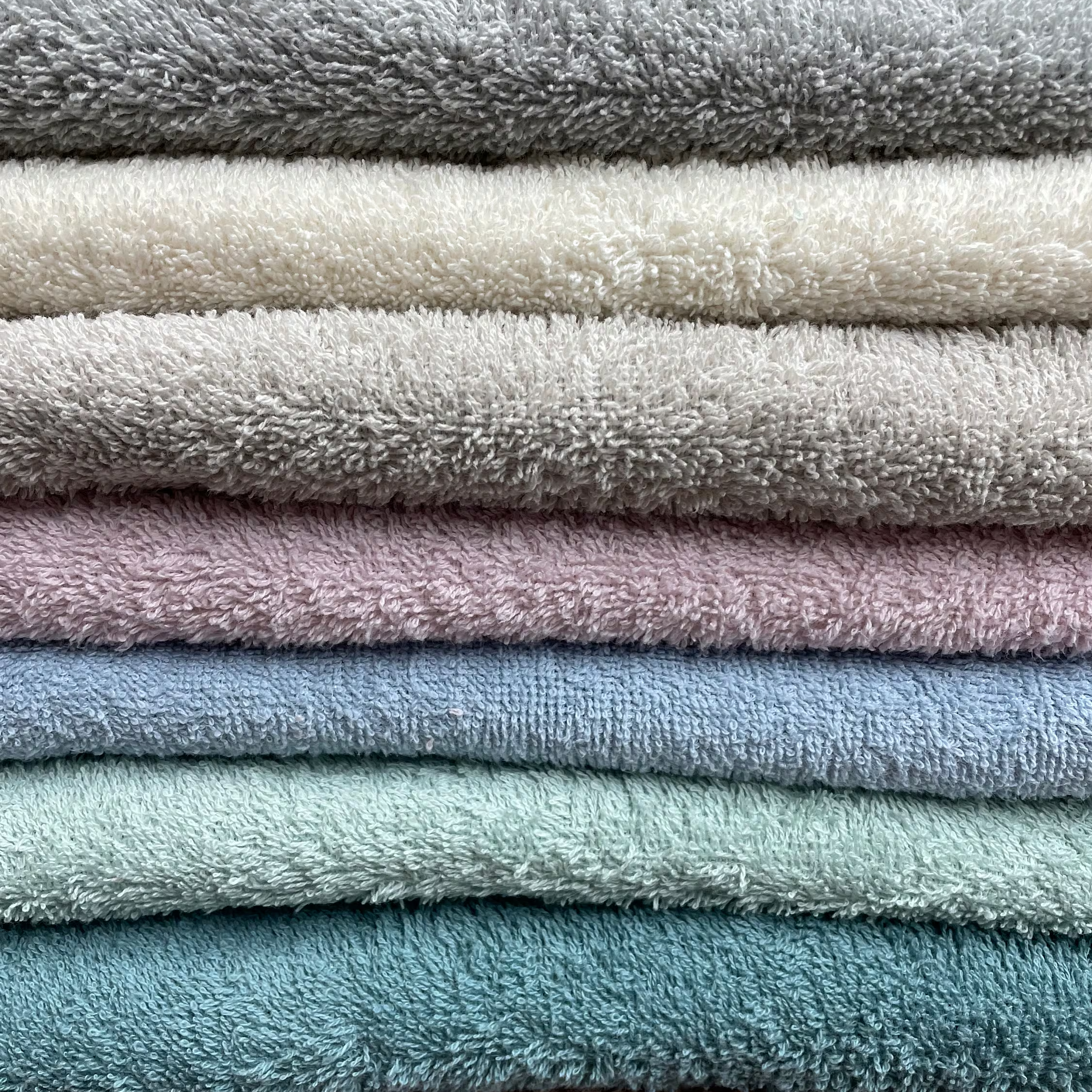
Industry insiders revealed that the core profit point of inferior bathrobes lies in fabric substitution. The cost of high-quality pure cotton terry cloth and waffle cotton fabrics is 2-3 times higher than that of ordinary cotton-polyester blended fabrics. Many businesses and Sports Towels Factory suppliers add a large proportion of polyester fibers (usually 30%-70%) to the fabric, and soften the surface through chemical finishing processes such as softener soaking and calendering treatment before leaving the factory. The finished products are silky and smooth in the short term, which is more delicate than pure cotton, so they can be sold at the price of pure cotton products. This kind of false softness will completely disappear after 2-3 times of washing, accompanied by fabric hardening, hair loss, pilling and other problems.
There are essential differences in physical properties, water absorption, skin-friendliness and durability between pure cotton bathrobes and cotton-polyester blended bathrobes, which can be verified through professional industry indicators. In accordance with China’s industry standard FZ/T 62017-2024 Bathrobes and Bath Towels Home Textiles, qualified pure cotton terry bathrobes have a water absorption rate of more than 400%, and the fabric terry loops are fluffy, three-dimensional and evenly arranged. Professional Baby Bathrobe Factories strictly adopt pure cotton materials for infant products to ensure maximum skin safety. Pure cotton fibers are natural plant fibers, free of chemical synthetic ingredients, non-irritating to sensitive skin, and will not cause allergies or itching after long-term contact with the body. Moreover, pure cotton fabrics have a unique “washing and softening” feature. With the increase of washing times, the surface residual floating fibers and finishing agents are removed, and the hand feel will become softer and more skin-friendly, with longer service life.

On the contrary, cotton-polyester blended bathrobes have obvious performance defects. Polyester fiber is a synthetic chemical fiber with poor hygroscopicity and air permeability. Although blended fabrics have the advantages of wrinkle resistance, shrinkage resistance and quick drying, their water absorption rate is usually only 150%-250%, which cannot meet the basic drying needs after bathing. In dry indoor environments, polyester components are extremely prone to static electricity, resulting in skin adhesion, dust adsorption and other problems. After long-term use and repeated washing, the polyester fibers on the fabric surface will ball and harden, the overall texture of the bathrobe will be rough, and it will lose luster and softness. In addition, relevant environmental protection data shows that polyester-containing home textiles will release a large number of microplastic fibers during each washing process, which will enter the water circulation system and cause potential environmental pollution.
In view of the messy market situation, textile testing experts have summarized five authoritative and practical identification methods suitable for ordinary consumers, which can accurately distinguish pure cotton and blended bathrobes without professional testing equipment:
First, check the washing label strictly and reject vague labels. Formal qualified bathrobes must be printed with complete fiber composition, percentage content, implementation standards and washing instructions. Consumers should refuse all products marked with vague words such as “cotton blended”, “high-grade cotton” without specific data. It is worth noting that many counterfeit pure cotton products only mark “cotton” in the main picture, but the detailed washing label hides the high proportion of polyester components, which is the most common consumer trap in the market.
Second, judge by GSM gram weight (industry core indicator). The gram weight per square meter (GSM) is the most intuitive standard to measure the thickness and density of bathrobes. High-quality pure cotton terry bathrobes for daily home use are 450-600 GSM; high-end spa and hotel pure cotton bathrobes are 600-700 GSM with thick and fluffy texture; lightweight waffle pure cotton bathrobes are 320-380 GSM with breathable and thin texture. Most blended bathrobes are below 400 GSM, relying on chemical softening to create a thick and soft illusion, and the fabric will become thin and rigid after washing.
Third, visual and tactile intuitive discrimination. Pure cotton fabrics are natural matte with soft luster, and the terry loops are slightly uneven and full of natural texture. The hand feel is fluffy and dry, not greasy or slippery. Blended fabrics are artificially bright and smooth, with a waxy plastic touch. When rubbing the fabric vigorously in dry weather, blended bathrobes will produce obvious static electricity and adsorption phenomenon, while pure cotton products have no static electricity.
Fourth, thread burning test (most accurate civilian method). Take the spare threads at the seam of the bathrobe for burning identification. Pure cotton fibers burn smoothly and continuously, with the smell of burning natural paper. The combustion residue is loose gray-white powder, which can be completely crushed by fingers without hard blocks. Blended fibers burn with black smoke and pungent chemical odor, and the residue is hard black melted plastic particles, which cannot be crushed and will stick to fingers.
Fifth, water absorption and recovery test. Drop clean water on the flat fabric surface. Pure cotton bathrobes absorb water quickly without water droplets accumulating, and the fabric can naturally recover its fluffy state after drying. Blended bathrobes have slow water absorption, easy water accumulation on the surface, and the fabric is easy to wrinkle and harden after drying.
Industry experts emphasize that pure cotton and blended fabrics have their own applicable scenarios, and there is no absolute good or bad. Pure cotton bathrobes are the first choice for family daily bathing, skin care and home leisure, focusing on skin-friendliness, water absorption and health. Cotton-polyester blended bathrobes are more suitable for business travel, travel and temporary hotel use, with the advantages of light weight, wrinkle resistance, quick drying and easy care. Consumers should avoid blind consumption of “pure cotton hype” and choose reasonably according to actual usage scenarios and needs.
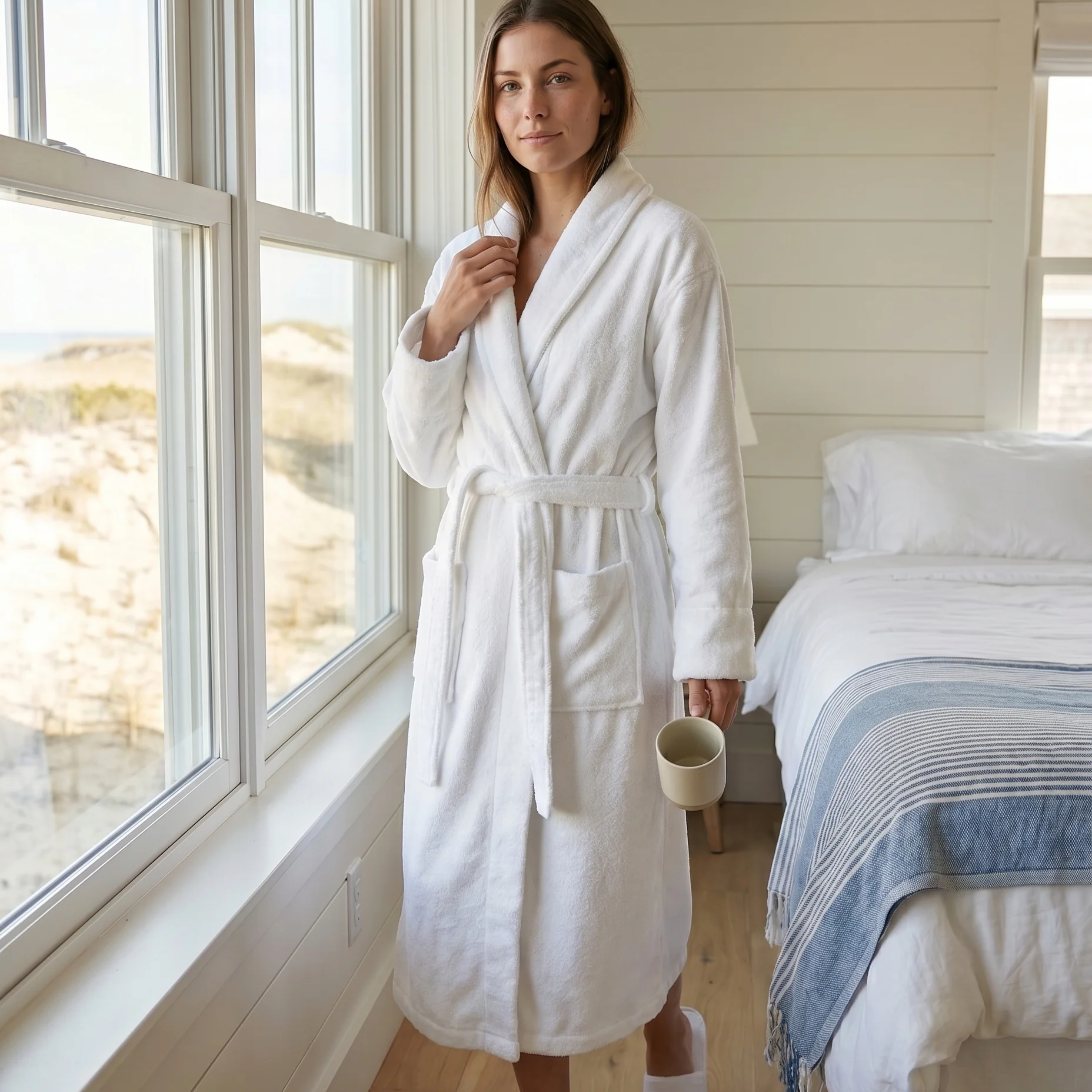
In addition, professionals share targeted maintenance suggestions for pure cotton bathrobes. Although pure cotton fabrics are pre-shrunk in the production process, they still have a small range of shrinkage risk under high-temperature washing and high-temperature drying. It is recommended to use cold water or warm water for gentle washing, avoid high-temperature boiling and long-time soaking, and choose natural air drying or low-temperature drying to effectively prevent shrinkage, hardening and hair loss, and prolong the service life of pure cotton bathrobes.
With the continuous upgrading of consumer demand for home textile quality, standardized fabric labeling and transparent material identification will become the inevitable trend of the bathrobe market. Consumer rights protection departments remind buyers to prioritize products with complete qualifications and clear labels, keep shopping vouchers, and defend their legitimate rights and interests in a timely manner once false labeling and fabric fraud are found.
(The materials are from the Internet. If there is any infringement, please contact us for deletion)
Post time: Aug-29-2026